Articles Posted in Uncategorized

Published on:


JMM’s Labor & Employment Group recently published an important update on new California requirements mandating that employers implement an emergency contact notification policy by March 30, 2026. This development applies broadly to all California employers, including those in the hospitality industry, making it especially relevant for Hotel Law Blog readers.

Deadline Approaching: California Employers Must Implement Emergency Contact Notification Policy by March 30, 2026

Significant monetary penalties may apply

By Monday, March 30, 2026, employers must give employees the opportunity to name an emergency contact and to indicate whether that contact should be notified if the employee is arrested or detained at the worksite, during work hours, or while engaged in job duties offsite where the employer has actual knowledge. Employers must also allow employees to update that information during employment. If an employee has requested notification, the employer must notify the designated contact should the employee be arrested or detained in the circumstances described in the statute (see above).

When due: March 30, 2026, or upon hiring (for those hired after compliance date)

Penalty: $500 per employee per day (for failure to notify employee of their rights, or for late notification), up $10,000 per employee

Recommendation: Notify all California employees in writing of their right to name an emergency contact for any purpose and to indicate whether employer should notify that contact if employee is arrested or detained during working hours or while performing work duties

Authority: Cal. Labor Code §§ 1555, 1558(d)(2)

JMM’s Labor and Employment attorneys counsel businesses and management on workplace issues, helping to establish policies that address problems and reduce job-related lawsuits. We act quickly to resolve claims and aggressively defend our clients in all federal and state courts, before the Department of Labor, the NLRB, and other federal, state and local agencies, as well as in private arbitration forums. We represent employers in collective bargaining negotiations and arbitration. If you have questions or need guidance on how these changes may affect your business, please contact a JMM attorney.
Published on:

Los Angeles, CA – September 29, 2025 – Jeffer Mangels Butler & Mitchell LLP (JMBM) is pleased to announce that the Firm’s Hotel Law Blog was named to FeedSpot’s Top Ten Hotel Law Blogs for 2025. Selections were made from thousands of blogs on the web and ranked by relevancy, authority, social media followers, and freshness.

“We are honored to be recognized as one of the top hotel law blogs,” said Jim Butler, Chair of the Firm’s the Global Hospitality Group® and publisher of the Hotel Law Blog. “Our goal is to stay ahead of the curve, delivering timely, practical insights, and this recognition affirms the value of our work.”

JMBM’s Hotel Law Blog provides business and legal insights to hotel owners, developers, independent operators, and investors, covering critical hotel issues such as hotel purchase, sale, development, financing, franchise, management, ADA, and IP matters. Topics also include hotel litigation, union avoidance and union negotiations, and cybersecurity & data privacy.

About the Global Hospitality Group®

JMBM’s Global Hospitality Group® is a team of seasoned professionals who have helped clients around the world with more than 4,700 hospitality properties valued at more than $125 billion.

About JMM

Jeffer Mangels & Mitchell LLP is a full-service law firm committed to providing clients with outstanding results. From our offices in Los Angeles, San Francisco, and Orange County, we serve our clients’ needs worldwide. For more information about our attorneys and our services, visit Jeffer.com.

NOTE: This press release and the sources referenced provide general information only–not legal advice. Consult a licensed attorney.

Published on:

Previously posted as a JMBM press release on September 11, 2025.

Sale will allow the historic Los Angeles restaurant to reopen

Los Angeles, CA – September 11, 2025 – Jeffer Mangels Butler & Mitchell (JMBM) recently represented the Richard J. Riordan estate in the sale of the Original Pantry Café in Downtown Los Angeles to real estate entrepreneur, Leo Pustilnikov.

JMBM partner Sheri Bonstelle led the transaction, handling the land use due diligence, negotiation and sale, and partner Caleb Gilbert oversaw the real estate contracts.

The Pantry Café is an historic restaurant at the corner of 9th and Figueroa streets in Downtown Los Angeles that first opened in 1924, and moved to its current location in 1950. It offered 24-hour a day service, and was known for never being closed from its opening until the Covid pandemic. The restaurant was purchased in 1981 by former Los Angeles Mayor Richard (Dick) Riordan, who obtained designation of the property as a Los Angeles Historic Cultural Monument in 1982, and owned and operated the location until his death in 2023.

“The Pantry is sort of like the story of LA,” Pustilnikov said in a statement. “It’s had its ups and downs, and hopefully, much like LA and much like Downtown, the reopening will boost the rebirth of Downtown with everything coming to it.”

About JMM

Jeffer Mangels & Mitchell LLP is a full-service law firm committed to providing clients with outstanding results. From our offices in Los Angeles, San Francisco, and Orange County, we serve our clients’ needs worldwide. For more information about our attorneys and our services, visit Jeffer.com.


JMM’s Global Hospitality Group® has been involved in more than $125 billion of hotel transactions and more than 4,700 hotel properties located around the globe.


Published on:

12 August 2025

Unlocking Value in Hospitality: The New Era of Hotel Mixed-Use Development in Qualified Opportunity Zones

By Guy Maisnik, Vice Chair of The Global Hospitality Group, Jeffer Mangels Butler & Mitchell, LLP

The One Big Beautiful Bill Act (OBBB) has fundamentally changed the landscape for real estate investment in America—permanently enshrining the Qualified Opportunity Zone (QOZ) framework and expanding the horizon for hotel mixed-use development. For developers, investors, lenders, and deal sponsors, the new OBBB regime offers unmatched certainty, flexibility, and opportunity—but it also demands rigorous compliance and strategic planning. Here’s a deep-dive narrative for industry professionals charting the future of hospitality-led community reinvestment.

I. The OBBB Revolution: OZ Permanency, Enhanced Incentives, and Hospitality 

With the OBBB’s passage, Opportunity Zones became a long-term pillar of U.S. tax policy. Gone is the uncertainty that once limited major capital flows. Instead, asset allocators—ranging from pension funds to private equity—can now underwrite horizon investments knowing key incentives like tax-deferral and gain exclusion are locked in.

Key Features for Hotel Projects 

  • Permanent OZ Program: No sunset. Sponsors can plan and phase large urban or resort projects without fear of the window closing.
  • Rolling Redesignation: New OZs will be proposed every decade, creating dynamic markets for future hospitality developments.
  • Rural OZ Boost: Rural hotels receive a 30% basis step-up after five years, and only need to improve 50% of their basis—a major win for resort and adventure destination sponsors.
  • Enhanced Transparency: With new annual reporting requirements, deal clarity is sharpened for institutional lenders, community stakeholders, and public-sector partners.

II. Structuring Hotel Mixed-Use Development for Maximum Opportunity

  1. Building for Compliance

Hotel projects are best structured as Qualified Opportunity Funds (QOFs) that invest in a Qualified Opportunity Zone Business (QOZB). This two-entity approach, favored by both tax counsel and institutional LPs, enables both property and active business income to qualify for OZ benefits.

  • Eligible Property: OZ programs allow owned and leasehold property, including real estate and movable FF&E, provided the “original use” or “substantial improvement” tests are satisfied.
  • Active Trade or Business: Hospitality operations must generate at least 50% of gross income from the property in the zone. Passive triple-net leases or heavily outsourced arrangements risk compliance.
  1. Navigating Substantial Improvement, Phasing, and Mixed-Use Complexities
  • Substantial Improvement: Most historic conversions (urban hotels, adaptive reuse) require doubling the basis of the building portion—except in rural OZs, where only a 50% increase is mandated.
  • Original Use Projects: New ground-up hotels are straightforward—they qualify from day one under “original use.”
  • Mixed-Use Allocation: Sponsors must allocate cost basis between hotel, retail, residential, conference, and parking assets—ensuring each meets applicable OZ standards.
  • Phased Construction: Treasury regulations recognize the reality of multi-phase developments; QOZBs may deploy capital under a 31-month working capital safe harbor, extendable for government delays.

III. Financing Hotel Projects: Capital Stacks, Lender Comfort, and Bonus Depreciation

  1. Typical Capital Stacks

Hotel OZ projects feature hybrid capital structures:

  • QOF Equity: Often the anchor, composed of rolled capital gains from investors seeking both tax deferral and upside.
  • Conventional Debt: Banks, CMBS lenders, and sometimes HUD offer construction and takeout financing, provided strict OZ compliance is maintained.
  • Preferred Equity/Mezzanine: Used to round out the stack, sometimes from EB-5 investors or public sources such as TIFs.
  • State and Local Incentives: Frequently paired with OZ investments for historic or catalytic hospitality projects.
  1. Lender Friction and Solutions

Lenders scrutinize OZ hotel projects for:

  • Debt Service Coverage: Underwriting must account for development timelines and ramp-up periods—a point of differentiation with hospitality.
  • Legal Opinions: Lenders often require tax counsel opinions attesting to OZ structure integrity and risk mitigation (notably around substantial improvement and safe harbor planning).
  • Transparency: Annual asset, impact, and compliance reporting (post-OBBB) is now critical for both institutional investors and lenders evaluating credit risk.
  1. Bonus Depreciation

Sponsors enjoy 100% first-year bonus depreciation for eligible tangible property acquired and placed in service after January 19, 2025—a benefit magnified for hotels, which have significant FF&E components. Property acquired before this date is subject to lower, phased-down deduction rates. Smart structuring and cost segregation studies allow rapid recovery of investment and stronger early-stage distributions.

Smart structuring and cost segregation studies allow rapid recovery of investment and stronger early-stage distributions.

IV. Investor Dynamics: Returns, Waterfalls, and Pitching Post-OBBB 

  • Return Profiles: Hospitality deals differ from multifamily or office—exhibiting more “J-curve” effects (delayed stabilization, upside via brand/repositioning, diverse cash flow streams).
  • Investor Benefits: Hotel OZ opportunities as:
    • Inflation-hedged, with dynamic income potential (room rates, F&B, events)
    • Community anchors driving local employment and revitalization
    • Vehicles for permanent tax benefit—especially appealing post-OBBB
  • Preferred Returns & Waterfalls: Proper structuring preserves upside for sponsors but ensures “tax attributes” (deferral, step-ups, exclusions) flow to eligible LPs.

V. A Real-World Hotel QOZ Case Study

Imagine a southwest city’s historic main street. The Project is a classic bank-to-luxury-hotel conversion (with integrated co-working, food hall, and community event space):

  • Site & Entitlement: Navigated brownfield remediation and landmark approvals (Year 1).
  • Capital Stack: $15M QOF equity, $20M construction loan, $4M preferred equity from an EB-5 syndicate, $3M TIF grant.
  • Structure: Two-entity (QOF + QOZB) structure; phased rollout leveraging 31-month safe harbor and bonus depreciation.
  • Operation: Multi-brand soft-flag arrangement with independent F&B vendors, maintaining “active business” status for QOZB.
  • Exit Scenarios: (a) Bulk sale to PE after 10 years; (b) REIT roll-up; (c) refinance and hold for continuous cash flow with tax-free treatment for investors.
  • Impact: 300+ construction and operations jobs, tourism revenue, triple-digit occupancy premium in Year 3.

VI. Sponsor’s Compliance Checklist: Hotel QOZ Project

Compliance Area Key Standard/Requirement Best Practice
Reinvest Gains 180-day deadline from realization Calendar/procedure tracking
QOF Formation US entity; Form 8996 self-certify Central file/annual checklist
QOZB Operations 70% tangible property, 50% income Site mapping, business plans
Substantial Improvement Double (or 50%) basis in 30 months Construction timeline
Working Capital 31-month plan, extendable for delays Written plan, track milestones
Reporting Annual impact, compliance reporting Data systems, CPA engagement
Depreciation 100% bonus for eligible property Cost segregation study
Exit/Waterfall Exit model, tax analysis for LPs PPM, scenario planning


VII. Key Legal and Regulatory Sources

  • Internal Revenue Code §§ 1400Z-1, 1400Z-2.
  • Treasury Regulations §1.1400Z2(a)-1, §1.1400Z2(d)-1 and final Treasury “QOZ” regulations (2019, 2020).
  • IRS Notices (e.g., 2021-10; working capital safe harbor).
  • OBBB legislative text and summaries (as finalized).
  • Industry guides on FF&E treatment, depreciation, and compliance architecture.

Conclusion: Seizing the Next Decade of OZ Hospitality

With permanency, expanded incentives, and heightened transparency, OBBB has set the stage for a decade of hospitality-led Opportunity Zone development. Sponsors prepared to rigorously document, diligently monitor, and creatively structure their hotel mixed-use projects will unlock attractive returns—for investors, lenders, local communities, and their own firms.

Industry leaders: Now is the moment to stake your claim in the next generation of transformational real estate, powered by federal support but dependent on vision, discipline, and innovative execution.


JMM’s Global Hospitality Group® has been involved in more than $125 billion of hotel transactions and more than 4,700 hotel properties located around the globe.


Published on:

JMM’s Trusts & Estates Group’s Basic Guide to Estate Planning has been updated for 2025. Continue reading for more information about the updates for 2025.

Estate Planning for 2025: New Applicable Exclusion Amount

JMM’s Basic Guide to Estate Planning has been updated for 2025 and is available for immediate download here: JMM’s 2025 Guide. The Guide addresses important estate planning issues and introduces some of the principal estate planning techniques that can provide solutions to these issues. Updates for 2025 include the following:

  • The amount that an individual can cumulatively transfer free of tax during lifetime and at death (to a recipient other than a spouse who is a U.S. citizen and/or certain charitable organizations) is $13,990,000.
  • The generation-skipping transfer (“GST”) tax exemption is also $13,990,000 per individual.
  • In addition to the exemptions described above, every individual can make gifts during life of up to $19,000 per recipient per year without paying gift tax.

If you would like to discuss how these changes affect you and your family, ways in which you might take advantage of the increased exemption amounts, or any other aspect of your estate plan, please contact us.

We suggest you review your estate plan with your attorney every three years to ensure it continues to meet your goals.

—————————————————————————————————————————

About JMM Trusts & Estates Group

JMM’s Trusts & Estates Group focuses on estate planning, wealth transfer planning, trust administration and the resolution of trust disputes. Our firm has one of the most active trusts and estates practices in California and our clients include individuals and families, and their business interests.

—————————————————————————————————————————

This update is provided to our clients, business associates and friends for informational purposes only. Legal advice should be based on your specific situation and provided by a qualified attorney.


JMM’s Global Hospitality Group® has been involved in more than $125 billion of hotel transactions and more than 4,700 hotel properties located around the globe.

Published on:

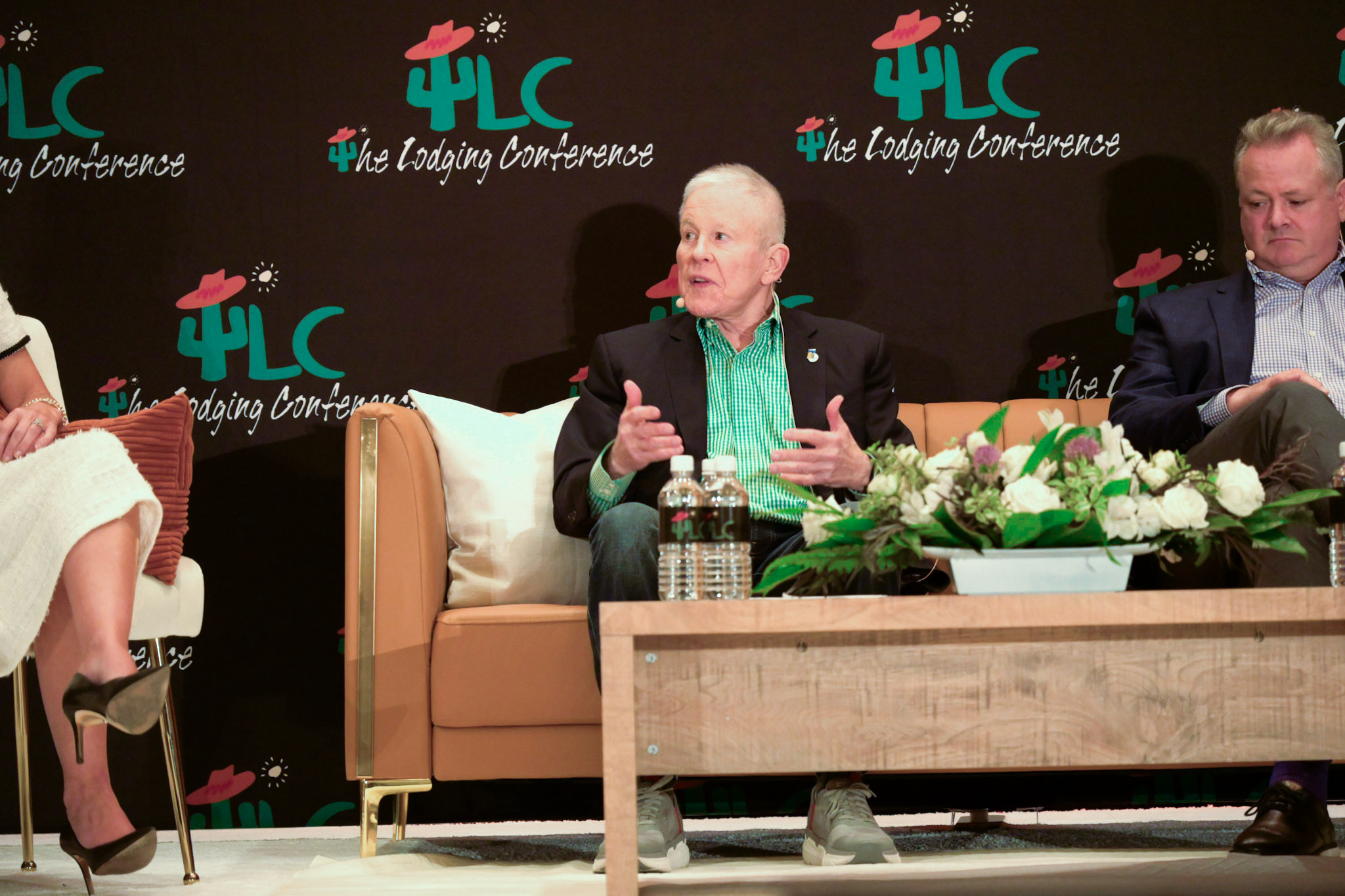
W-7-Butler-Jim-Edit-1024x683

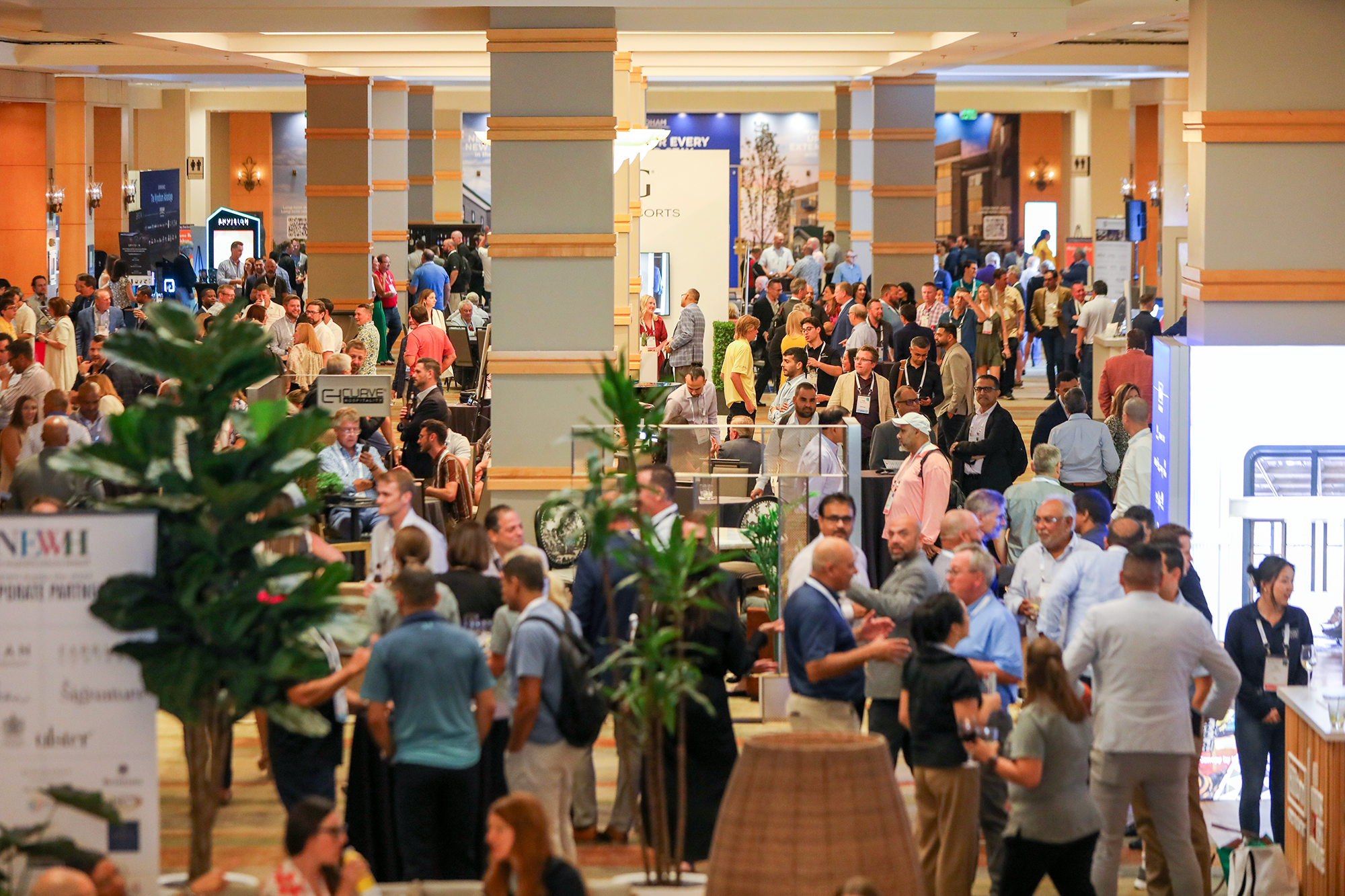
The 2024 Lodging Conference in Phoenix, AZ, emerged as a pivotal gathering for industry leaders, embodying a sense of cautious optimism as the sector navigates its post-pandemic evolution. This year’s discussions transitioned away from the lingering impacts of COVID-19, shifting towards a more forward-thinking approach that emphasized analytics-driven decision-making and a renewed focus on company culture. Many valuable topics were discussed, including the balance between technology and the personal touch in hospitality, as well as emerging investment trends.

Key Themes and Discussions

Panel discussions showcased a variety of perspectives on the changing market landscape. Themes included a sense of anticipated clarity following the upcoming elections, alongside a wave of refinancing and ongoing property improvements that are driving increased deal activity. With approximately $5.8 billion in U.S. hotel securitized loans approaching repayment, the market is ripe for transactions. Several panelists echoed this optimism, highlighting a particularly bright investment horizon.

Amid the focus on financial strategies and market predictions, the conference also delved into personal leadership development. CEOs shared their experiences on fostering better leadership within their organizations. Some panelists emphasized the importance of active listening over hasty problem-solving, while others highlighted the need for leaders to prioritize their time and cultivate meaningful connections. This renewed focus on leadership strategies underscored a broader trend in the industry: the recognition that effective leadership is not just about making decisions but about building a collaborative and supportive company culture.

As the conference drew to a close, the dominant sentiment was one of anticipation. Industry leaders are preparing for what many expect to be a “snowball effect” in deal-making, particularly as the Federal Reserve has started to lower interest rates, paving the way for a more dynamic market. The consensus was that 2025 holds promise, especially for those prepared to adapt and innovate amidst changing economic conditions.

Reflecting on the Experience

This year’s conference was not only well-organized but also incredibly productive. This is a thrilling time for the industry, with transformative change on the horizon. Many attendees were buzzing about the recent interest rate cuts and how they signal a brighter future for hotel investments.

Our team walked away with valuable perspectives into the surge in hotel deal activity, the enduring strength of extended stay demand, and the delicate balance of integrating technology while preserving an essential personal touch with guests. Most importantly, we had the wonderful opportunity to reconnect with old friends and forge new relationships, marking another year of resounding success at the Lodging Conference.

Here are some photos from the conference, capturing the connections and conversations that made this gathering memorable. We can’t wait for next year’s event!

TLC-Sudeck-1024x682

tlc-7-1024x652

TLC-2024-1024x682

Published on:

JMBM’s Basic Guide to Estate Planning has been updated for 2024 and is available for immediate download here: JMBM’s 2024 Guide. The Guide addresses important estate planning issues and introduces some of the principal estate planning techniques that can provide solutions to these issues. Updates for 2024 include the following:

  • The amount that an individual can cumulatively transfer free of tax during lifetime and at death (to a recipient other than a spouse who is a U.S. citizen and/or certain charitable organizations) is $13,610,000.
  • The generation-skipping transfer (“GST”) tax exemption is also $13,610,000 per individual.
  • In addition to the exemptions described above, every individual can make gifts during life of up to $18,000 per recipient per year without paying gift tax.

If you would like to discuss how these changes affect you and your family, ways in which you might take advantage of the increased exemption amounts, or any other aspect of your estate plan, please contact us.

We suggest you review your estate plan with your attorney every three years to ensure it continues to meet your goals.

About JMM Trusts & Estates Group
JMM’s Trusts & Estates Group focuses on estate planning, wealth transfer planning, trust administration and the resolution of trust disputes. Our firm has one of the most active trusts and estates practices in California and our clients include individuals and families, and their business interests.


JMM’s Global Hospitality Group® has been involved in more than $125 billion of hotel transactions and more than 4,700 hotel properties located around the globe.


Call-for-Speakers-Sponsors-Email-Banners

Become a speaker or sponsor for Meet the Money®!